Notice of the Lijiang Municipal Bureau of Culture and Tourism August 29, 2026

Notice of the Lijiang Municipal Bureau of Culture and Tourism on Standardizing the Business and Service Practices of Travel Agencies and Tour Guides

To all travel agencies and tour guides:
In accordance with the provincial video conference held on August 25 regarding the rectification of market order in tourism and management issues at tourist attractions, as well as the meeting convened on August 26 in Lijiang City to advance strict rectification of “unreasonably low-priced tours,” the following notice is issued concerning the standardization of business practices by travel agencies and service conduct by tour guides.
I. Strictly implement the province’s “22 Measures” for market rectification and the “Eight Prohibitions” for tourism practitioners.
II. All travel agencies must ensure full adoption of the 2026 version of the electronic tourism contract. Substituting electronic contracts with paper contracts is strictly prohibited. All electronic contracts must be uploaded to the regulatory platform.
III. Uphold the separation of tourism and shopping: tour itineraries must not include shopping venues, and no additional shopping venues may be added through agreements or other means beyond the contract. Under no circumstances shall any tour group organize tourists to enter shopping venues.
IV. During their stay in Lijiang, all tour groups shall operate under the “one team throughout” principle; from pickup to drop-off, the travel agency and tour guide must remain involved throughout the entire process.
The responsibility must be fulfilled to the end; the receiving agency and tour guide shall not be changed without valid reason midway. Any unauthorized transfer or consolidation of groups by travel agencies or guides shall be subject to severe penalties.
The above matters shall be strictly implemented effective immediately. Any violations will be dealt with severely, up to and including the revocation of the travel agency’s business license and the tour guide’s certificate.

Lijiang City Culture and Tourism Bureau
August 29, 2026
Impression Lijiang

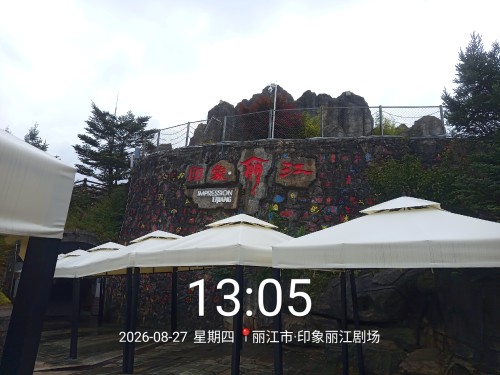
Impression Lijiang — Zhang Yimou’s Snow Mountain Spectacle

Impression Lijiang (《印象·丽江》) is a massive open-air live performance directed by Zhang Yimou, Wang Chaoge, and Fan Yue — the same creative team behind the Beijing Olympics opening ceremony. Set against the raw backdrop of Jade Dragon Snow Mountain at 3,100 meters above sea level, it’s the highest-altitude outdoor theater production in the world.

🎭 What Makes It Special

Feature Details
Directors Zhang Yimou, Wang Chaoge, Fan Yue
Venue Ganhaizi Theater, Blue Moon Valley, Jade Dragon Snow Mountain
Duration ~65 minutes
Cast 500+ non-professional performers from 16 local villages and 10+ ethnic minorities
Animals 100+ Yunnan ponies
Setting Daytime outdoor performance with Jade Dragon Snow Mountain as the natural backdrop
The show unfolds in six chapters — “Ancient Tea Horse Road,” “Toasting the Snow Mountain,” “Heaven on Earth” — weaving together the raw power of the plateau landscape with the unvarnished spirit of its people. Critics have called it “a dialogue between the soul and heaven and earth.”
💡 Why it’s worth it: Photos and videos can’t capture the feeling of sitting on a red-earth amphitheater with a 5,596-meter snow peak towering behind the stage. Many audience members are moved to tears during the 2-minute “prayer to the mountain” scene.

🎫 Tickets (2026)

Ticket Type Price
Standard ¥280 (~$39)
VIP ¥346 (~$48)
Student discount ¥140 (high school & college students with valid ID)
Booking:
  • Best option: Reserve up to 7 days ahead via the official “丽江旅游集团” WeChat mini-program (real-name booking required)
  • Walk-up tickets available at the venue, but sell out during peak season
  • Student discounts must be purchased on-site with ID — not available online

⏰ Showtimes

Season Schedule
Peak (May–Oct & holidays) 3 shows daily: 09:00 / 11:00 / 14:00
Off-peak 2 shows daily: 11:00 / 14:00
The show runs year-round except during extreme weather or maintenance.

🪑 Seating Strategy

Unlike traditional theaters, Impression Lijiang has open seating within zones. The instinct to grab front-row seats is actually a mistake here — the front rows fill your vision with performers but cut off the snow mountain backdrop.
Best seats: Rows 3–5 from the back, center section
  • Captures the full triptych: red-earth stage, performer formations, and the snow peak
  • Arrive at least 40 minutes early to secure your spot

🧥 What to Bring

  • Warm layers — At 3,100m, even summer days are chilly in an open-air theater
  • Sun protection — High-altitude UV is relentless; hat, sunglasses, SPF 50+
  • Oxygen canister — Buy in Lijiang Old Town for ¥15–20 (¥60 at the venue). Most people feel fine, but it’s cheap insurance
  • Arrive 40 min early — Factor in time for park entry, shuttle transfers, and queueing

🗺️ Recommended One-Day Itinerary

Option A: Glacier Park Cable Car + Afternoon Show (Recommended)

Time Activity
Morning Depart Lijiang → Sunrise at Ganhaizi
Late morning Glacier Park cable car to 4,506m
Noon Lunch & rest
13:30 Impression Lijiang show
Afternoon Stroll through Blue Moon Valley
Why this works: You tackle the high-altitude hike first, then recover while sitting through the show. Having stood on the summit makes the mountain-themed performance hit differently — it shifts from “watching a mountain” to “understanding the people beneath it.”

Option B: Morning Show + Blue Moon Valley

Time Activity
11:00 Impression Lijiang show
Noon Lunch
Afternoon Blue Moon Valley (2–3 hours)
Evening Return to Lijiang Old Town
Best for: Travelers skipping the cable car who want a relaxed day.

📍 Getting There

The theater sits inside the Jade Dragon Snow Mountain scenic area at Ganhaizi.
  • Public bus 101 from Lijiang Old Town: ¥15, ~1 hour
  • Shared ride: ¥20–30, ~40 min
  • Taxi/DiDi: ¥80–110, ~40 min
Once inside the park, transfer to the internal shuttle to reach Ganhaizi Theater.

💡 Pro Tips

  • The 11:10 show tends to have smaller crowds if you want a more intimate experience
  • Weather cancellations happen — high winds or heavy snow can shut down the performance
  • The show pairs naturally with Blue Moon Valley and the snow mountain cable cars in a single day
  • Some scenes feature galloping horses and loud chanting — parents with young children should be prepared

Impression Lijiang isn’t a polished Broadway musical. It’s 500 local villagers singing ancient songs in their own clothes, on the land their ancestors have inhabited for centuries, with a sacred mountain watching over them. That authenticity — raw, unamplified, and inseparable from the landscape — is what makes it unforgettable. 🏔️🎭

Blue Moon Valley, Lijiang

Blue Moon Valley, Lijiang 蓝月谷

Blue Moon Valley (蓝月谷) is one of the most photogenic spots in all of China — a string of glacial lakes at the foot of Jade Dragon Snow Mountain (玉龙雪山) in Lijiang, Yunnan. The water here is a surreal turquoise-blue, fed by snowmelt rich in minerals.

What Makes It Special

The valley sits at about 2,900 meters (9,500 ft) and is part of the larger Jade Dragon Snow Mountain scenic area. The lakes get their striking blue-green color from dissolved copper ions and a pH around 8.2, which scatters sunlight in a way that makes the water look like liquid turquoise.

Behind every lake rises the snow-capped massif of Jade Dragon Snow Mountain — thirteen peaks that make every photo look like a postcard.

The Four Lakes

A flat wooden boardwalk connects four main lakes in sequence, fed by the same glacial stream:
Lake What to See
White Water Terrace (白水台) Milky travertine steps with pale blue-green pools — fewer crowds, great warm-up shots
Jade Liquid Lake (玉液湖) The bluest of them all. Viral-photo central.
Mirror Pond (镜潭湖) Perfect for reflection shots — crouch low at the water’s edge
Blue Moon Lake (蓝月湖) The namesake crescent lake with a stone arch bridge framing the mountain
Wave-Listening Lake (听涛湖) Water spills over a stone dam with a soothing rush — the final stop

The full walk takes about 2–3 hours at a leisurely pace. The path is flat and stroller-friendly.

Tickets & Costs (2026)

Blue Moon Valley has no separate ticket — it’s included in the Jade Dragon Snow Mountain scenic area:
  • Scenic Area Entry Fee: 100 RMB (~$14) per person
  • Internal Shuttle Bus: 20 RMB (~$3) round trip (mandatory — private cars can’t enter)
  • Total minimum cost: 120 RMB (~$17)
Optional add-ons:
  • Glacier Park Cable Car: 140 RMB — ascends to 4,506m (book up to 7 days ahead, limited daily quota)
  • Spruce Meadow Cable Car: 60 RMB — gentler, easier to book
  • Electric Cart inside the valley: 50 RMB — not recommended, the boardwalk is flat and scenic

How to Get There

From Lijiang Old Town, head to the Jade Dragon Snow Mountain Visitor Center, then transfer to the park’s internal green shuttle bus.
Option Cost (RMB) Time
Public Bus 101 15 ~1 hour
Shared ride 20–30 ~40 min
Taxi / DiDi 80–110 ~40 min

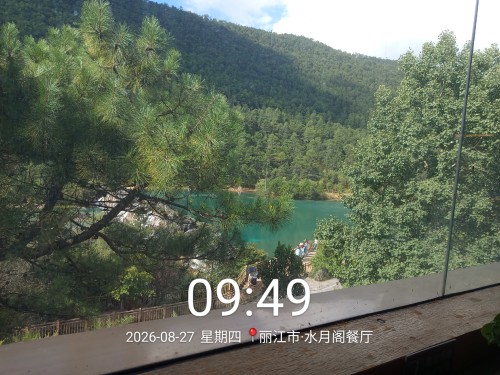
⚠️ Important shuttle bus tip: When the green shuttle bus announces “Blue Moon Valley,” do NOT get off. That stop is for the electric cart route — you’ll be 4.8 km from the actual lakes. Stay on for one more stop: Shuiyuege (水月阁 / Water Moon Pavilion). The turquoise water is a 2-minute walk from there.

Best Time to Visit

  • Best hours: 8:00 AM – 11:00 AM for the brightest water colors; or around 2:00–3:00 PM for the deepest “gemstone blue” under side-backlighting

  • Best months: March–May and October–December — clear skies, great snow mountain views
  • One rule above all: Pick a sunny day. The blue water only shows its magic under direct sunlight. On a cloudy day, it looks dull and gray.

What to Wear & Bring

  • Bright, solid colors for photos — white, cream, red, or yellow pop against the turquoise. Avoid dark blue/green (you’ll blend in).
  • SPF 50+ sunscreen, sunglasses, hat — plateau UV is intense and deceptive
  • Layered clothing — temperature swings are sharp; even summer mornings are chilly
  • Comfortable non-slip shoes — boardwalks can get slick
  • Oxygen canister — buy in Lijiang Old Town for 15–20 RMB (same one costs 60 RMB inside the park). Most people feel fine at 2,900m, but it’s cheap insurance if you’re coming straight from sea level.

Combining with Jade Dragon Snow Mountain

Most visitors do both in one day. Three common combos:
  1. Easy & Photogenic: Spruce Meadow cable car (morning) → Blue Moon Valley (afternoon) — gentle pace, family-friendly
  2. Iconic: Glacier Park cable car (early morning) → Blue Moon Valley (afternoon) — high altitude, more strenuous
  3. Minimalist: Blue Moon Valley only — skip cable cars, just enjoy the lakes with the mountain as your backdrop

Quick Tips

  • Plan 2–3 hours for the valley alone; a full day if combining with a cable car or the Impression Lijiang show
  • No drones allowed — the entire scenic area is a no-fly zone
  • Don’t wade in the water — it’s glacier runoff, just above freezing, and the rocks are slippery
  • The “free souvenir photos” near the cart drop-off are a tourist trap — you get a tiny thumbnail for free, then they try to sell you a larger print

If you’re planning a trip to Lijiang, Blue Moon Valley is the kind of place where photos still don’t do it justice — some shades of blue you just have to see for yourself. 🏔️💙

Spruce Meadow

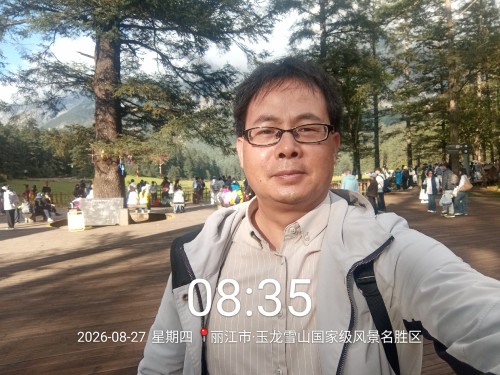
Spruce Meadow (云杉坪 / Yúnshānpíng) is a stunning alpine meadow on the eastern slope of Jade Dragon Snow Mountain (Yulong Snow Mountain), about 25 km north of Lijiang Old Town in Yunnan, China.

Here are the key highlights:

What It Is

A vast high-altitude meadow at ~3,240 meters, ringed by ancient spruce forests with snow-capped peaks as the backdrop.

In the Naxi language it’s called “You Wu Ge” (游午阁), meaning “land of love and death” — historically regarded as a sacred place where lovers would meet their end for love.

Getting There

From Lijiang Old Town, take the 101 bus (雪山专线) from Zhongyi Market for about ¥15, or a taxi for ~¥80–100.

Inside the park, you’ll ride a shuttle bus, then take the Spruce Meadow cable car (about 8 minutes) up to the meadow.

Tickets (2026)

Park entry fee: ¥100

Spruce Meadow cable car + shuttle bus: ¥60

Tickets can be booked in advance via the “丽江旅游集团” WeChat mini-program.

What to Do

Walk the 1.5 km wooden boardwalk through the meadow and surrounding spruce forest — the full loop takes about 45 minutes.

Take photos with the snow mountain, forest, and meadow layered behind you — especially beautiful in the soft morning light before 9 AM.

It’s often paired with Blue Moon Valley (蓝月谷) for a relaxed day trip, as it’s less crowded than the main glacier park.

Tips

Altitude is moderate (3,240 m), so altitude sickness is usually mild, but walk slowly and bring snacks/water.

UV is strong — bring sunscreen, sunglasses, and a hat.

Best light for photos is early morning; it gets busier after 10 AM.

If you’re planning a visit, it’s a great choice for a more relaxed, scenic experience compared to the high-altitude Glacier Park, with fairy-tale-like forest and meadow views.

Padmasambhava

 (Sanskrit: पद्मसम्भव, “Lotus-Born”), also known as Guru Rinpoche (“Precious Teacher”), is one of the most revered figures in Tibetan Buddhism. He is widely credited with establishing Buddhism in Tibet during the 8th century CE.

Origins & Legend

According to tradition, Padmasambhava was not born from human parents but miraculously appeared in the Dhanakosha Lake in Oddiyana (modern-day Swat Valley, Pakistan), seated upon a blooming lotus flower. This “lotus birth” symbolizes his purity and transcendence of ordinary karmic conditioning.
He studied under numerous masters across India, mastering tantric practices, Dzogchen (Great Perfection), and Vajrayana rituals. His reputation as a powerful exorcist and spiritual adept spread throughout the Himalayan region.

Arrival in Tibet (c. 774 CE)

Padmasambhava was invited to Tibet by King Trisong Detsen (Khri-srong-lde-btsan) at the request of the Indian abbot Śāntarakṣita. Their mission was threefold:
  1. Subdue local obstacles — Tibetan folklore describes Padmasambhava taming hostile spirits and Bon deities that resisted the construction of Samye Monastery, Tibet’s first Buddhist monastery.
  2. Establish monastic Buddhism — While Śāntarakṣita represented the scholarly Sutrayana tradition, Padmasambhava introduced the esoteric Vajrayana methods.
  3. Translate scriptures — He worked with Tibetan translators (lotsawas) and Indian pandits to render Sanskrit Buddhist texts into Classical Tibetan.

Foundational Legacy

Father of the Nyingma School Padmasambhava is the founding patriarch of the Nyingma (literally “Ancient”) tradition, the oldest of Tibet’s four major Buddhist schools. The Nyingma lineage traces its highest teachings—Dzogchen (Great Perfection)—directly to him.
The Terma Tradition Anticipating future persecution of Buddhism in Tibet, Padmasambhava concealed thousands of teachings, sacred objects, and spiritual treasures (terma) in rocks, lakes, statues, and even within the minds of his disciples. These were to be discovered centuries later by destined tertöns (“treasure revealers”). The most famous terma text is the Bardo Thödol (Tibetan Book of the Dead).
The Eight Manifestations Tibetan iconography depicts Padmasambhava in eight principal forms, each representing a different aspect of his activity:
  • Guru Pema Gyalpo (Lotus King)
  • Guru Nyima Özer (Ray of the Sun)
  • Guru Loden Chokse (Intelligent Youth)
  • Guru Pema Jungne (the Lotus-Born)
  • Guru Shakya Senge (Lion of the Shakyas)
  • Guru Senge Dradrok (Roaring Lion)
  • Guru Pema Drakpo (Lotus Wrath)
  • Guru Dorje Drolo (Vajra Crazy Wisdom)

The Vajra Guru Mantra

His heart mantra is among the most widely recited in Tibetan Buddhism:
Oṃ Āḥ Hūṃ Vajra Guru Padma Siddhi Hūṃ
Each syllable carries symbolic weight:
  • Oṃ Āḥ Hūṃ — Body, Speech, and Mind of all Buddhas
  • Vajra — Indestructible reality
  • Guru — Spiritual master
  • Padma — Lotus (his symbolic birth)
  • Siddhi — Spiritual attainment
  • Hūṃ — Enlightened mind

Departure & Continuing Presence

Rather than dying an ordinary death, Padmasambhava is said to have departed Tibet for the Copper-Colored Mountain (Zangdok Palri), a pure realm where he remains alive and accessible to devoted practitioners. This belief sustains a living guru-disciple relationship across centuries.
Commemoration: The 10th day of each lunar month is observed as a Guru Rinpoche day, with the 10th day of the 6th Tibetan month celebrated as his birth anniversary.

Modern Significance

Today, Padmasambhava transcends sectarian boundaries. While central to Nyingma, he is venerated across all Tibetan Buddhist schools—Sakya, Kagyu, and Gelug—as the “Second Buddha.” His image appears in temples from Lhasa to Bhutan, and his mantra echoes through Himalayan valleys and Western Dharma centers alike.

Tiger Leaping Gorge

plain

Here's your complete guide to **Tiger Leaping Gorge (虎跳峡)**, one of the world's deepest and most dramatic canyons.

🏔️ What Is Tiger Leaping Gorge?

Tiger Leaping Gorge is a 15-kilometer canyon carved by the Jinsha River (upper Yangtze) between two massive mountain ranges: Jade Dragon Snow Mountain (5,596m) to the east and Haba Snow Mountain (5,396m) to the west. The gorge drops 3,790 meters from the highest peaks to the river — making it one of the deepest on Earth.

The name comes from a Naxi legend: a tiger escaped hunters by leaping across the river at its narrowest point — just 25 meters wide — via a massive rock midstream.

The gorge is divided into three sections: Upper, Middle, and Lower. Most visitors experience only the Upper and Middle sections.

🚨 CRITICAL 2026 UPDATE: Trail Closures

This is the most important thing to know before planning your trip.

As of 2025–2026, Chinese authorities issued official closure notices naming the High Trail (高路), Middle Gorge (中虎跳), and Lower Gorge as “undeveloped and closed” areas. All hiking, trekking, camping, and unlicensed guiding in these zones is officially prohibited.

What this means in practice:
  • On paper: The classic 2-day High Trail trek is closed.
  • On the ground: Enforcement varies. Some hikers report the trail is still passable with no active checkpoints, while others find sections blocked or restricted.

  • The Middle Gorge descent (Sky Ladder / 168 Steps) is the most affected — the direct route from Teacher Zhang’s was closed as of summer 2025, though some hikers have found alternative paths with persistence.

My strong advice: Before booking anything, check the latest on-the-ground reports from recent hikers (Reddit, recent blog comments, or ask your Lijiang guesthouse). Do not rely on pre-2025 guidebooks. If the High Trail is closed, the official scenic road and viewing platforms still offer a spectacular — if less adventurous — experience.


🥾 The Two Main Ways to Experience It

Option 1: The Classic High Trail (2 Days) — If Open

This is the famous trek that put Tiger Leaping Gorge on the world map. It’s considered one of China’s top 10 classic hiking routes — moderate difficulty, non-technical, but incredibly scenic.

The Route:
Day Section Distance Time Highlights
1 Naxi Family Guesthouse → 28 Bends → Halfway Guesthouse ~10–12 km 5–7 hrs The brutal 28 Bends (28 switchbacks climbing 400–500m), then stunning cliffside trails with constant gorge views.
2 Halfway → Tina’s Guesthouse → (optional) Middle Gorge ~8–11 km 3–5 hrs Longdong Waterfall (you walk through/behind it), then descent to the river via the Sky Ladder or zigzag paths.
Key landmarks:
  • 28 Bends (二十八道拐): The hardest part. A relentless 1.5–2 hour uphill slog. After this, the trail is mostly flat or downhill.

  • Halfway Guesthouse (中途客栈): The legendary first-night stop, famous for its “Balcony of Death” (爽死你阳台) — a terrace with what many call the best toilet view in the world, looking straight at Jade Dragon Snow Mountain.

  • Longdong Waterfall (龙洞瀑布): On Day 2, the trail passes directly through/under a waterfall. Waterproof gear is essential.

  • Tina’s Guesthouse (中峡客栈): The traditional end point of the trek. From here, you can arrange transport back to Lijiang or onward to Shangri-La.

Trailhead Update: Buses from Lijiang no longer reliably stop at Qiaotou (桥头). Most now drop you near the Naxi Family Guesthouse area, which has become the de facto trailhead. You may need to take a short taxi/shuttle (¥20) up the final hill to the guesthouse.


Option 2: Scenic Road Day Trip (No Hiking Required)

If the High Trail is closed, or you prefer not to trek, the official scenic area along the paved road is still fully open and impressive.
What you get:
  • Upper Tiger Leaping (上虎跳): Paved walkways and viewing platforms right at the river’s edge. You can stand meters from the roaring Jinsha River and see the famous Tiger Leaping Stone.

  • Lijiang Section (new 2025): A 2.6km glass walkway with mechanical tiger exhibits and waterfall views. More developed, easier, but less raw.

  • Shangri-La Section: The traditional entry with the “Flat-Step Cloud Ladder” (平步青云梯) — an escalator/stair system down to the river.
Lijiang Section Shangri-La Section
Best for Families, first-timers, easy access Hikers, those continuing to Shangri-La
Ticket ¥65 ¥45 (¥70–120 with escalator)
Difficulty Minimal — paved paths, escalators Moderate — stairs and some hiking
Time 2–3 hours 2–4 hours (or 2 days for High Trail)

💰 Costs (2026)

Item Price
Scenic area entry ¥45–65 (Shangri-La section ¥45; Lijiang section ¥65)
High Trail guesthouses ¥100–150/night (basic but comfortable)
Lijiang → Gorge shuttle/bus ¥30–50
Tina’s → Lijiang/Shangri-La bus ¥40–60
Middle Gorge descent ¥15–30 (local landowner fee, if accessible)
Guide for Middle Gorge ~¥600/group (if required due to closures)
Luggage forwarding Often free if arranged through your Lijiang guesthouse/driver

💡 Cash is king: Many guesthouses, trail vendors, and local fee collectors don’t reliably take mobile payment. Bring plenty of small bills.


🗓️ Best Time to Visit

Season Conditions
Spring (Apr–Jun) 🌟 Best. Dry trails, wildflowers, clear skies, moderate temps.
Summer (Jul–Aug) Avoid. Monsoon season — landslides, rockfall risk, trail closures, muddy conditions.

Autumn (Sep–Nov) 🌟 Best. Crisp air, best visibility, stable weather.
Winter (Dec–Feb) ❄️ Cold but clear. Fewest crowds. Some icy sections; bring traction devices. Great for photography with low-angle light.


🎒 What to Pack

Essential Why
Hiking boots with grip The trail is narrow, rocky, and often dusty or wet. Regular sneakers are dangerous.

Rain jacket + waterproof pants Mountain weather changes fast; you’ll walk through Longdong Waterfall on Day 2.
Warm layers Elevation ranges 1,800m–2,670m. Mornings are cold even in summer.
Sunscreen + sunglasses + hat High-altitude UV is intense.
Cash (small bills) Trail vendors, guesthouses, and local fees often don’t take cards or mobile pay.
Water + snacks Available at guesthouses and trail vendors, but carry backup.
Power bank Limited charging options on the trail.
Passport/ID Required for bus tickets and entry.

⚠️ Don’t overpack. Store your big luggage in Lijiang or arrange for your driver to drop it at Tina’s. Hike with just a daypack.


🚗 Getting There & Back

From Lijiang

  • Bus: Morning buses (around 08:00–09:30) from Lijiang Bus Station to Qiaotou / the gorge. ~2–2.5 hours, ¥35–45.

  • Shuttle/Van: Many guesthouses and hotels arrange shared shuttles (~¥30–50).
  • Private car: ¥300–500 for the day. Best if combining with Jade Dragon Snow Mountain.

From Shangri-La

  • Buses heading to Lijiang will drop you at the gorge. ~2 hours.

Returning

  • From Tina’s Guesthouse, there are afternoon buses back to Lijiang (~¥40–50, departing around 15:30) or onward to Shangri-La (~¥60–100). Buy your ticket at Tina’s or nearby — avoid touts charging inflated prices.


📸 Photography Tips

  • Best light: 10:00 AM or 4:00 PM — golden side-light on the cliffs.
  • Top shots:
    • Halfway Guesthouse balcony — Jade Dragon Snow Mountain framed by the gorge.
    • Upper Gorge viewing platform — Tiger Leaping Stone with the river raging around it.
    • Longdong Waterfall — Dramatic water-on-trail action shot.
    • Eagle’s Beak Rock — A famous cliffside photo spot along the High Trail.
  • Drone: Allowed in the scenic area, but extremely risky — the gorge winds are unpredictable and strong. Many have lost drones here.


🗺️ Quick Decision Guide

You want… Do this
The full adventure 2-day High Trail — if confirmed open
A taste without commitment Day trip to Upper Gorge (Shangri-La section)
Easiest possible experience Lijiang section glass walkway + escalator
Combine with Shangri-La Hike Day 1, sleep at Halfway, Day 2 finish at Tina’s, bus to Shangri-La
Combine with Jade Dragon Snow Mountain Day 1: Jade Dragon. Day 2: Tiger Leaping Gorge day trip.

⚠️ Safety Reminders

  • Don’t hike the High Trail if it’s officially closed. Landslide and rockfall risks are real, especially after rain.
  • Don’t attempt the Middle Gorge descent alone if access is restricted. The Sky Ladder is genuinely terrifying (near-vertical 168 steps) and not for those with vertigo.

  • Don’t hike after dark. No trail lighting.
  • Download AMap Global before you go — Google Maps is unreliable in the gorge. Set language to English and pre-mark your guesthouses.


Xu Xiake (徐霞客) in Lijiang, Yunnan

Xu Xiake (1587–1641), China’s most celebrated Ming Dynasty geographer and travel writer, spent his final and most poignant chapter in Lijiang — a journey that forged one of the most famous friendships in Chinese literary history.

The Journey to Lijiang (1639)

In the 12th year of the Chongzhen reign (1639), at age 51, Xu Xiake was on his epic “Journey of Ten Thousand Miles” (万里遐征) to trace the source of the Yangtze River. After visiting Chicken Foot Mountain (鸡足山) in Binchuan, he received an invitation from Mu Zeng (木增, 1587–1646), the 19th-generation Naxi chieftain of Lijiang.

Xu arrived in Lijiang on the 25th day of the first lunar month and stayed for 16 days (some sources say 15).

Friendship with Mu Zeng

The meeting was arranged through Chen Jiru (陈继儒, “Meigong”), a mutual friend and renowned literatus who wrote recommendation letters for Xu. Though one letter was lost to river bandits, the other reached Mu Zeng, who eagerly awaited Xu’s arrival.

Mu Zeng received Xu with the highest Naxi ceremonial banquet“eighty grand dishes” (大肴八十品) — and moved him to Jietuo Lin (解脱林, now Fuguo Temple 福国寺), a scenic temple at the foot of the mountain.

Their bond was immediate and deep. Mu Zeng, a cultured chieftain and poet himself, asked Xu to:
  • Write a preface and collate his poetry collection Shanzhong Yiqu (《山中逸趣》)
  • Edit and classify his literary work Yunke Danmo (《云薖淡墨》)
  • Compile the Records of Chicken Foot Mountain (《鸡足山志》) — which Xu completed in three months

Xu also tutored Mu Zeng’s four sons. In return, Mu Zeng gifted Xu a fur mattress and four taels of gold.


Xu Xiake’s Impressions of Lijiang

Xu left behind over 9,000 words in his Lijiang Diary (丽江日记), making him the first Han Chinese writer to describe Lijiang in such rich, scientific detail. He recorded:
  • The geography and water systems of the ancient town
  • The Naxi people’s customs, politics, and economy
  • The grandeur of Mu’s Mansion, which he famously described as:

    “宫室之丽,拟于王者”“The splendor of the palace rivals that of a king”

He also wrote the Lijiang Summary (《丽江纪略》) and Origin of the Dharma King (《法王缘起》), providing invaluable historical records of Naxi culture.


The Tragic Farewell

Xu Xiake’s health had been deteriorating throughout his southwest journey. In Lijiang, his foot disease (风疾, now believed to be a form of stroke or severe edema) worsened, and his legs swelled until he could no longer walk.

Seeing his condition, Mu Zeng arranged an official sedan chair and escort to carry Xu all the way back to his hometown of Jiangyin, Jiangsu — a journey of 150 days across mountains and rivers.

This act of friendship is remembered as the “Xu-Mu Friendship” (徐木友谊) — a cross-cultural bond between a Han scholar and a Naxi chieftain that transcended ethnicity and status.

Xu returned home in 1640 and passed away the following year at age 54, but he never stopped working on his travelogue.


Legacy in Lijiang Today

Today, Lijiang honors this historic friendship in several ways:
Site Description
“Friendship” Statue A bronze statue of Xu Xiake and Mu Zeng stands before the Zhongyi Archway at Mu’s Mansion, depicting their animated conversation.

Xu Xiake Memorial Hall Located near Mu’s Mansion in Lijiang Old Town, it displays his travelogues, writings about Lijiang, and the story of his friendship with Mu Zeng.

Xu Xiake Milestone A monument marking his 5,250 km journey from Jiangyin to Lijiang was unveiled in 2024 at Tianyu Liufang Square in the old town.


Key Works from His Lijiang Stay

  • 《丽江纪略》Lijiang Summary
  • 《鸡足山志》Records of Chicken Foot Mountain (compiled for Mu Zeng)
  • 《溯江纪源》Tracing the Source of the Yangtze (where he corrected the error that the Min River was the Yangtze’s source, proving it was actually the Jinsha River)
  • 《滇游日记·丽江篇》Yunnan Travel Diary: Lijiang (~9,000 words)
Xu Xiake is widely regarded as the first person to “promote” Lijiang to the wider Chinese world through his detailed, affectionate writings — and his friendship with Mu Zeng remains a symbol of cultural exchange between the Han and Naxi peoples.

Mu’s Mansion (木府)

Mu’s Mansion (木府) — Lijiang, Yunnan

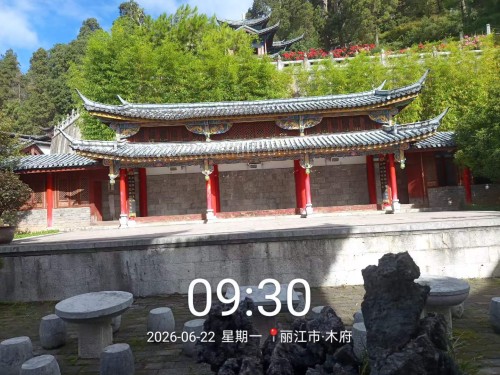
Mu’s Mansion (full name: Mu Family Chieftain’s Yamen / 木氏土司府衙署) is the historic residence and government office of the Naxi Mu chieftains, located in the heart of Lijiang Old Town, Yunnan Province. It is often called the “Forbidden City of Lijiang” for its grand scale and imperial-style layout.


Quick Facts

Location 49 Guangyi Street, Dayan Town, Gucheng District, Lijiang City, Yunnan
Area 30,666 m² (~8 acres) with a 369-meter central axis

Buildings 15 buildings, 162 rooms total
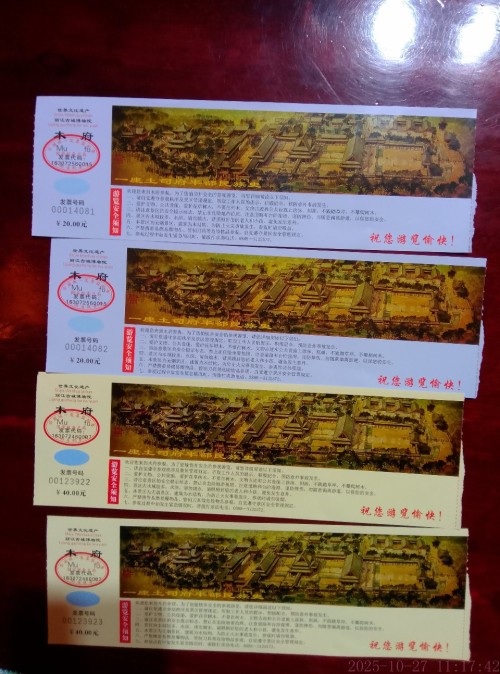
Ticket CNY 40 (adults); CNY 20 (students); free for children under 1.2 m
Hours 8:30 AM – 6:00 PM (ticket sales stop at 5:00 PM)
Time needed 2–3 hours
Best time Spring and autumn

History

The mansion was founded during the Yuan Dynasty and reached its peak in the Ming Dynasty (from 1382 onward). For 470 years across 22 generations, the Mu clan ruled Lijiang as hereditary chieftains under the Ming and Qing empires.

The original complex was so grand it was said to rival the Forbidden City itself — a risky boast in imperial China. Most of it was destroyed during Qing Dynasty warfare and the 1996 Lijiang earthquake. The current structure is a meticulous reconstruction (1998–1999) based on the original site, now also housing the Lijiang Ancient City Museum.

In 1997, the mansion — as part of Lijiang Old Town — was designated a UNESCO World Heritage Site.


What to See

The mansion is laid out along a strict central axis facing east, backed by Lion Mountain (Shizi Shan), following classical Chinese feng shui principles.

Key Buildings

Building Description
Zhongyi Fang (忠义坊) The iconic stone archway at the entrance, inscribed with “Loyalty” bestowed by the Ming Wanli Emperor

Yishi Hall (议事厅) The main meeting hall where the chieftain conducted official business; features three imperial plaques reading “Devoted to the Country” from Ming emperors

Wanjuan Pavilion (万卷楼) The library housing thousands of sutras, paintings, and calligraphy; a treasure of Naxi literary culture

Yuyin Pavilion (玉音楼) A masterpiece of classical architecture; stored imperial decrees and gifts from the emperors

Sanqing Hall (三清殿) A Taoist temple at the highest point; climb here for a panoramic view of Lijiang Old Town

Architecture & Culture

The mansion uniquely blends Ming Dynasty Central Plains palace architecture with Bai and Naxi ethnic craftsmanship. The layout features streams and waterways throughout — reflecting the Naxi spiritual connection to flowing water. Murals in the Yuyin Pavilion show the fusion of Han Buddhism, Tibetan Buddhism, and Taoism, reflecting the Naxi people’s open, inclusive worldview.


How to Get There

  • From Lijiang Railway Station: Take bus 105 or the Lijiang Old Town Direct Bus to Zhongyi Market, then walk north ~550 m.

  • From Lijiang Old Town: Walk from Sifang Street along Qiyi Street eastward for ~10–15 minutes. Look for the Guanmenkou Gate and continue along Guangyi Street for 100 m.

  • By taxi from the railway station: ~30 minutes, about CNY 25.


Nearby Attractions

  • Lijiang Old Town — UNESCO World Heritage site, adjacent to the mansion
  • Yulong Snow Mountain — visible from the mansion’s main gate
  • Shuhe Ancient Town — a quieter, well-preserved town on the Tea Horse Road
  • Baisha Village — known for ancient murals, ~8 km north

Tips

  • Guided tours are included in the ticket price — a Naxi guide in traditional dress will explain the history as you walk.

  • Night visits: The mansion offers special evening immersive experiences with performances and Naxi feasts.
  • A local saying goes: “If you haven’t visited Mu’s Mansion, you haven’t truly visited Lijiang.”