
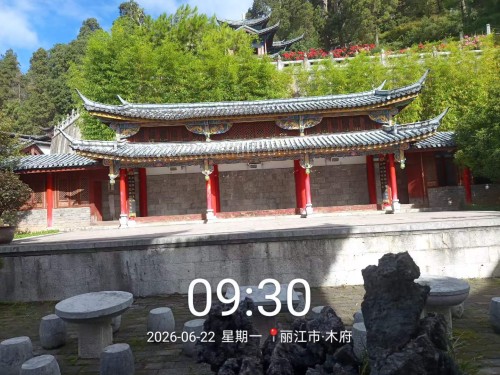
Mu’s Mansion (木府) — Lijiang, Yunnan
Mu’s Mansion (full name: Mu Family Chieftain’s Yamen / 木氏土司府衙署) is the historic residence and government office of the Naxi Mu chieftains, located in the heart of Lijiang Old Town, Yunnan Province. It is often called the “Forbidden City of Lijiang” for its grand scale and imperial-style layout.
Quick Facts
| Location | 49 Guangyi Street, Dayan Town, Gucheng District, Lijiang City, Yunnan |
| Area | 30,666 m² (~8 acres) with a 369-meter central axis |
| Buildings | 15 buildings, 162 rooms total |
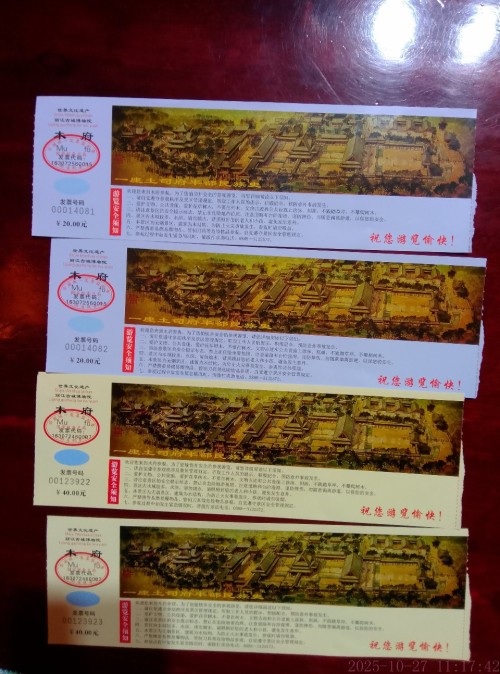
| Ticket | CNY 40 (adults); CNY 20 (students); free for children under 1.2 m |
| Hours | 8:30 AM – 6:00 PM (ticket sales stop at 5:00 PM) |
| Time needed | 2–3 hours |
| Best time | Spring and autumn |
History
The mansion was founded during the Yuan Dynasty and reached its peak in the Ming Dynasty (from 1382 onward). For 470 years across 22 generations, the Mu clan ruled Lijiang as hereditary chieftains under the Ming and Qing empires.
The original complex was so grand it was said to rival the Forbidden City itself — a risky boast in imperial China. Most of it was destroyed during Qing Dynasty warfare and the 1996 Lijiang earthquake. The current structure is a meticulous reconstruction (1998–1999) based on the original site, now also housing the Lijiang Ancient City Museum.
In 1997, the mansion — as part of Lijiang Old Town — was designated a UNESCO World Heritage Site.
What to See
The mansion is laid out along a strict central axis facing east, backed by Lion Mountain (Shizi Shan), following classical Chinese feng shui principles.
Key Buildings
| Building | Description |
|---|---|
| Zhongyi Fang (忠义坊) | The iconic stone archway at the entrance, inscribed with “Loyalty” bestowed by the Ming Wanli Emperor |
| Yishi Hall (议事厅) | The main meeting hall where the chieftain conducted official business; features three imperial plaques reading “Devoted to the Country” from Ming emperors |
| Wanjuan Pavilion (万卷楼) | The library housing thousands of sutras, paintings, and calligraphy; a treasure of Naxi literary culture |
| Yuyin Pavilion (玉音楼) | A masterpiece of classical architecture; stored imperial decrees and gifts from the emperors |
| Sanqing Hall (三清殿) | A Taoist temple at the highest point; climb here for a panoramic view of Lijiang Old Town |
Architecture & Culture
The mansion uniquely blends Ming Dynasty Central Plains palace architecture with Bai and Naxi ethnic craftsmanship. The layout features streams and waterways throughout — reflecting the Naxi spiritual connection to flowing water. Murals in the Yuyin Pavilion show the fusion of Han Buddhism, Tibetan Buddhism, and Taoism, reflecting the Naxi people’s open, inclusive worldview.
How to Get There
-
From Lijiang Railway Station: Take bus 105 or the Lijiang Old Town Direct Bus to Zhongyi Market, then walk north ~550 m.
-
From Lijiang Old Town: Walk from Sifang Street along Qiyi Street eastward for ~10–15 minutes. Look for the Guanmenkou Gate and continue along Guangyi Street for 100 m.
-
By taxi from the railway station: ~30 minutes, about CNY 25.
Nearby Attractions
-
Lijiang Old Town — UNESCO World Heritage site, adjacent to the mansion
-
Yulong Snow Mountain — visible from the mansion’s main gate
-
Shuhe Ancient Town — a quieter, well-preserved town on the Tea Horse Road
-
Baisha Village — known for ancient murals, ~8 km north
Tips
-
Guided tours are included in the ticket price — a Naxi guide in traditional dress will explain the history as you walk.
-
Night visits: The mansion offers special evening immersive experiences with performances and Naxi feasts.
-
A local saying goes: “If you haven’t visited Mu’s Mansion, you haven’t truly visited Lijiang.”