Investigate Naxi ethnic history

Naxi (Nakhi) ethnic history traces a people of Tibeto-Burman (Sino-Tibetan) linguistic affiliation who primarily inhabit northwestern Yunnan (especially the Lijiang region), with smaller communities in southwestern Sichuan and southeastern Tibet. The official Chinese ethnic classification “Naxi” was formalized in 1954, encompassing groups that historically used various self-names (such as Naxi, Na, Nari/Na-ri, Nahan) and external designations like “Moxie,” “Mosha,” or “Mosuo.” Population is roughly 300,000–320,000.

Origins and Early Migration

Most scholars link the Naxi to the ancient Qiang (proto-Qiang) peoples of the northwestern Chinese highlands (Yellow River–Huangshui / Hehuang region in present-day Gansu and Qinghai). These nomadic or semi-nomadic groups began southward migrations centuries before the Common Era, following river valleys along the eastern edge of the Tibetan Plateau (the “ethnic corridor”).

Key stages:

  • South to the upper Min River, then southwest into the Yalong River basin in western Sichuan.
  • Further west and south to the upper Jinsha (Yangtze) River area.
  • Settlement in the fertile Lijiang and Baisha basins by the early centuries CE (some accounts place this around the 1st–3rd centuries or earlier).

Archaeological evidence supports long-term presence: “Lijiang Man” fossils (~100,000 years old) indicate early human activity in the basin, while stone-cist tombs and other sites show cultural layers. Many researchers favor a multi-origin model: southward-migrating Qiang groups fused with local indigenous populations (and later absorbed influences from neighboring groups such as Bai, Tibetan, Yi, and Pumi). Some local traditions and alternative theories emphasize stronger indigenous or other eastern components, but the Qiang-migration framework remains dominant.

Historical Chinese records refer to related groups as “Maoniu Yi” (Han dynasty), “Mosha Yi” (Jin), and “Moxie” or “Moxie Man” (Tang onward).

Medieval Period: Kingdoms and Consolidation

From the 6th–13th centuries, Naxi ancestors lived under the successive influence of the Nanzhao and Dali kingdoms (centered near Erhai Lake). One Naxi-related polity, the Yuexi Zhao (越析诏), was among the “Six Zhaos” of the Nanzhao era but was eventually absorbed.

By the 10th–13th centuries, agriculture increasingly replaced pastoralism as the economic base in the Lijiang area. Society developed hierarchical structures with emerging local elites.

Yuan, Ming, and Qing Dynasties: The Mu Chieftains

A major turning point came with the Mongol conquest. In 1253, Kublai Khan’s forces moved through the region en route to conquering the Dali Kingdom. Local Naxi leaders submitted, and the Yuan dynasty established Lijiang Prefecture (1278). A local chieftain (ancestor of the Mu line) was appointed hereditary tusi (native official).

Under the Ming dynasty (especially after 1382), the Mu family rose to prominence. The Hongwu Emperor granted the Chinese surname “Mu” (木) to the leader Ajia Ade (thereafter Mu De). The Mu tusi ruled Lijiang as hereditary chieftains for centuries, collecting taxes and tribute for the imperial court while expanding influence northward into Tibetan borderlands (reaching areas of present-day Deqin, Batang, and Markam at their height). They promoted agriculture, handicrafts, trade along the Tea Horse Road, and cultural synthesis—patronizing Tibetan Buddhism, Chinese Confucian learning, and local Dongba traditions. Baisha served as an early political and ritual center; Lijiang Old Town later flourished.

The Mu era (Yuan–early Qing) is often viewed as a golden age of Naxi political autonomy and cultural flourishing under imperial suzerainty.

In 1723, the Qing Yongzheng Emperor implemented the gaitu guiliu policy (“replacing native chiefs with circulating officials”). Hereditary Mu rule ended; the family retained a lesser administrative title but lost real power. Direct Qing administration accelerated Han Chinese cultural and economic influence, land commodification, and social change.

Modern Era

In the Republican period and after 1949, the Naxi were integrated into the modern Chinese state. The 1954 ethnic identification confirmed the unified “Naxi” nationality. Land reform, collectivization, and the Cultural Revolution disrupted traditional practices (including Dongba religion), but post-1978 reforms brought cultural revival, tourism centered on Lijiang Old Town (UNESCO World Heritage Site since 1997), and renewed interest in Dongba heritage.

Today the Naxi maintain a distinct identity while participating fully in broader Chinese society. Lijiang remains their cultural heartland, known for its architecture, Naxi ancient music, Dongba culture, and the living memory of Mu rule and ancestral migration myths preserved in Dongba scriptures.

Key Themes in Naxi Historical Memory

Dongba texts emphasize ancestral migrations from the north, the unity of related groups, and the half-brother relationship between humans and nature spirits—reflecting both historical movement and ecological worldview. The Mu family’s genealogies blend legendary origins with documented service to successive dynasties.

The Naxi story is one of adaptation: from highland pastoralists to settled agriculturalists and traders at a cultural crossroads between Chinese, Tibetan, and Southeast Asian influences, while preserving a unique indigenous religious and literary tradition.

Explore Dongba ritual ceremonies

Dongba ritual ceremonies form the heart of Naxi Dongba culture. Performed by Dongba priests (ritual specialists), these ceremonies mediate between humans, nature spirits, ancestors, gods, and demons. They aim to restore balance, ensure prosperity, heal, protect, and guide souls. Rituals range from short household rites lasting a few hours to multi-day community ceremonies involving dozens of manuscripts, chanting, dancing, offerings, and symbolic actions.

Dongba priests traditionally prepare elaborate altars with rice bowls holding painted ritual cards (dzu), wooden tablets, incense, and offerings. They wear distinctive five-lobed crowns (kho) painted with deities and use instruments such as bells, swords, and drums. Ceremonies often include animal sacrifices (chickens, pigs, goats), purification with smoke or water, and recitation of pictographic texts.


Scholars estimate hundreds to around 2,000 distinct ceremony types historically, grouped into major categories such as nature worship, prosperity rites, purification/exorcism, life-cycle events, and funerals.


Major Categories and Key Ceremonies


1. Nature and Heaven Worship (earliest and most foundational)

Sacrifice to Heaven (Muan bpo / 祭天)**: The most important and solemn Naxi ceremony. Naxi people call themselves “the people who worship Heaven.” Held annually (major rite in the first lunar month; smaller one in the seventh) by family, lineage, or village groups at fixed outdoor altars.

Setup includes two chestnut trees (representing Heaven Father and Mother) and a cypress (Heaven’s maternal uncle), plus sacred stones and a disaster-averting pole topped with an egg.

Procedures typically include purification, incense offering, animal sacrifice, recitation of the human migration epic (Chongban Tu / Creation and Migration of Humans), confession of sins, praying for good weather and harvests, and sending off the deities. It reinforces ancestral memory, ethnic identity, and harmony with the cosmos.


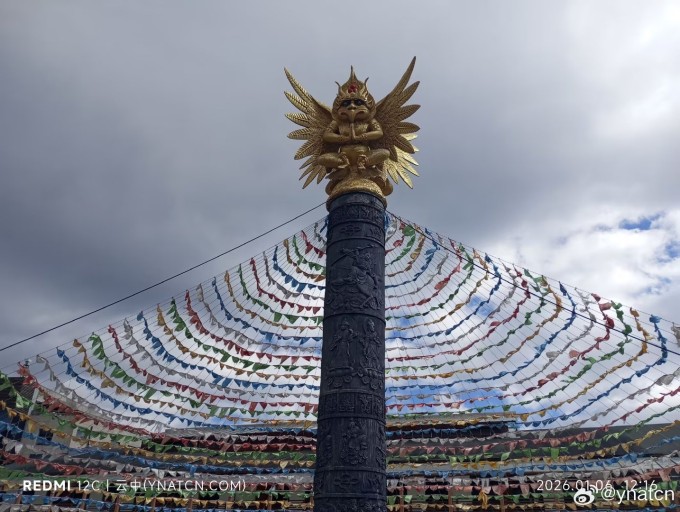
Worship of Nature Spirits / Shu (Ssu gv or Shu Gu / 祭署)*: Propitiates the *shu (serpent-like nature spirits, often depicted as human-snake hybrids) believed to own the land, mountains, forests, and water. Humans and shu are mythologically half-brothers; human overexploitation of nature angers them, causing illness or disaster. Rituals seek reconciliation, often involving offerings and the myth of the struggle between birds (Garuda-like) and snakes.


Other nature rites: Sacrifices to mountain deities, victory spirits, stars, wind, hearth gods, and village tutelary spirits.


2. Propitiation and Exorcism (for protection and healing)

Demon-expulsion and purification rites (e.g., removing “impurities” or specific ghosts) are very common. These may involve sword dances, smoke purification with rhododendron or juniper, and targeted scriptures.

Healing rituals diagnose spiritual causes of illness (often linked to offended spirits) and restore balance.

Prevention of calamities, plagues (including livestock epidemics), and sins.


3. Life-Cycle and Prosperity Rites

Marriage ceremonies*: Sequences of rituals that transfer the bride’s life-force (su*) to the new household while ensuring her natal family retains vitality. Involve inviting life gods, offerings, and chanting around the fire pit.

House-building blessings, naming of newborns, prolongation of life, and rites for family/herd prosperity (worship of protectors of domestic animals and grain).

Divination is frequently incorporated.


4. Funerary and Soul-Guidance Ceremonies

These are among the most elaborate.

Ordinary funerals guide the soul along the ancestral path back to the ancestral homeland (often involving cremation traditions historically).

Special funerals for Dongbas**: Highly elaborate, featuring a long painted “Sacred Road to Heaven” (or Road to the Gods) scroll (up to 14–20 meters) that depicts the soul’s journey; the Dongba recites the accompanying text at length.

Sacrifice to the Wind (Hai Lali Ken or Jifeng / 祭风)**: Specifically for unnatural deaths, especially love suicides (historically common among young couples facing arranged marriages). The souls are guided to a paradisiacal “Third Kingdom of the Jade Dragon” (a romantic afterlife realm of freedom, nature, and eternal love) rather than the ordinary ancestral land. It also seeks to prevent further tragedies by appeasing wind demons associated with suicide. Large versions can be dramatic and lengthy.


5. Other Notable Rites

Rituals honoring the founder Dongba Shilo (Dingba Shiluo).

Longevity rites, confession of sins, and community-wide prosperity or plague-averting ceremonies.


Structure and Performance Style

Most ceremonies follow a core pattern: purification → inviting/installing deities → offerings and praise (chanting from manuscripts) → petitioning or expelling negative forces → sending off the spirits.

Music and dance are integral—chanting uses specific melodies, and dances may mimic animals, deities, or combat against demons (often with swords). Multiple Dongbas may collaborate on larger rites. Manuscripts serve as both prompts and sacred objects; some rituals require 20–100+ texts.


Modern Context

Traditional full-scale ceremonies declined sharply after 1949 and during the Cultural Revolution but have seen partial revival since the 1980s, often framed as cultural heritage. Simplified demonstrations occur at cultural sites (e.g., Yushuizhai or in Lijiang Old Town), during festivals such as Sanduo Festival, or in village settings. Full traditional performances are rarer and typically held privately or in more remote Naxi communities. Annual Dongba gatherings help transmit knowledge.

These ceremonies embody the Dongba worldview of reciprocal relationships between humans and the spirit-filled natural world. They remain a profound expression of Naxi identity, ecological ethics, and ancestral continuity.

Naxi Dongba culture

Naxi Dongba culture is the traditional religious, literary, artistic, and philosophical system of the Naxi (Nakhi) people, primarily concentrated in the Lijiang area of northwestern Yunnan, China (with communities also in neighboring Sichuan and Tibet border regions). It is named after the Dongba (东巴; Naxi: dto-mba), the ritual specialists or “wise men/priests” who preserve and transmit it.

Dongba culture is one of the most distinctive living indigenous traditions in China. Its ancient manuscripts were inscribed on UNESCO’s Memory of the World Register in 2003.


Core Beliefs and Worldview

Dongba religion is fundamentally animistic and polytheistic, centered on the idea that all things—mountains, rivers, trees, animals, rocks, and natural forces—possess spirits. A key myth holds that humans and Nature are half-brothers (sharing the same father but different mothers). Harmony between people and the natural/spiritual world is essential; imbalance brings illness, disaster, or misfortune.


There are thousands of spirits and deities in the pantheon (over 2,400 mentioned in scriptures). Major categories include nature gods (especially serpent-like shu or naga spirits associated with land and water), ancestral gods, protector deities, and a complex hierarchy influenced by Tibetan Bon religion. Important rituals often address propitiating these spirits, expelling demons, healing, funerals, and major life events.


The religion blends indigenous Naxi practices with strong influences from Tibetan Bon (pre-Buddhist Tibetan religion), plus elements of Tibetan Buddhism, Chinese Taoism, and Confucianism, reflecting Lijiang’s historical position as a cultural crossroads.

The Dongba Priests

Dongbas are traditionally male ritual specialists whose knowledge is learned (often passed patrilineally within families, though later apprenticeship expanded).

They serve as intermediaries between humans, gods, and spirits—conducting ceremonies, divination, healing, and reciting sacred texts.

Training involves mastering complex rituals, chanting, dancing, painting, and reading the script; a skilled “great Dongba” can perform dozens of major ceremonies.

They are distinguished from sani (or sanii), another type of Naxi ritual specialist more oriented toward shamanic possession.


Rituals range from short exorcisms to multi-day ceremonies (e.g., funerals, heaven-worship/tian ceremonies, or propitiating nature spirits). Performances involve chanting from scriptures, ritual dancing, music, offerings, and the use of painted wooden tablets, cards, and masks.


Dongba Script and Literature

The Dongba script (Naxi: sə-ʨə lv-ʨə, meaning “marks on wood and stone”) is a pictographic writing system—often called the world’s only living hieroglyphic/pictographic script still in use for religious purposes. It consists of roughly 1,000–1,400 symbols depicting gods, animals, plants, objects, and actions.


Used almost exclusively by Dongbas to record ritual texts (not everyday writing).

There is also a secondary syllabic script called Geba.

More than 30,000 manuscript volumes exist (about 1,000 types/ritual categories), covering mythology, cosmology, history, genealogy, astronomy, medicine, ethics, and daily life. They form an encyclopedic record of traditional Naxi society.

Famous literary works include creation epics, migration stories, and the long “Road to Heaven” (or Sacred Road) painting scroll used in funerals.


Arts and Practices

Dongba culture is highly artistic and performative:

Painting**: Vibrant ritual paintings on paper, wood, or long scrolls (e.g., the famous multi-meter “Sacred Road to Heaven” depicting the afterlife journey).

Dance and music**: Ritual dances (often mimicking animals or deities) and chanting accompany ceremonies.

Crafts**: Wooden tablets, masks, paper cuttings, and offerings made for rituals.

Other elements include traditional Naxi music (distinct from Dongba ritual music), architecture, clothing, and festivals such as the important annual Heaven-worship ceremony.

History and Modern Status

Origins trace to ancient Qiang-related peoples who migrated southward. The system developed over centuries, absorbing Bon influences (legend credits a Bon shaman named Dongba Shilo/Tonpa Shenrab). It flourished until the mid-20th century.


After 1949, and especially during the Cultural Revolution, practices were heavily suppressed. Many manuscripts were lost or scattered (large collections exist overseas). Since the 1980s reform era, there has been a revival under the broader label “Dongba culture” (often framed more as cultural heritage than active religion). Research institutes, museums, and tourism have helped preserve it, though traditional practicing Dongbas remain few, especially fully trained ones from the pre-1949 generation. Transmission continues in some villages and through cultural programs.


Experiencing Dongba Culture in Lijiang

Dongba Culture Research Institute / Museum** (often associated with Black Dragon Pool / Jade Spring Park) — key site for manuscripts, exhibitions, and research.

Other places: Baisha Old Town (historical Naxi center with frescoes), Shuhe or remote villages, Dongba paper workshops, and cultural performances.

Look for ritual demonstrations, pictograph workshops, or traditional music.

Dongba culture remains a living (if transformed) expression of Naxi identity, emphasizing harmony with nature, ancestral memory, and a unique pictorial language that continues to fascinate scholars and visitors.